English
English at St. Joseph's Catholic Primary School
At St. Joseph's Catholic Primary School, a small village school in a rural community, we are committed to delivering a high-quality English curriculum that aligns with our school's Catholic ethos and values. Our approach to teaching English is rooted in the belief that children thrive when immersed in a rich literary world, fostering a love of reading and developing strong written communication skills.
Literacy Tree: A Whole-School Approach to English
To ensure a cohesive and engaging approach to English, we have adopted the Literacy Tree, an award-winning platform that places children's literature at the heart of our curriculum. Through this book-based approach, our children become immersed in a diverse range of fiction, non-fiction, and poetry, encountering over 100 literary texts and 75 unique authors as they progress through the school. English is split into Reception, Years 1 and 2 and Years 4, 5 and 6.
The Literacy Tree curriculum provides comprehensive coverage of the National Curriculum expectations for writing composition, reading comprehension, grammar, punctuation, and vocabulary, as well as spelling. Each unit leads to purposeful application within a wide variety of written outcomes, allowing our children to develop their authorial style and critical reading skills.
Aligning with Our Vision and Values
At St. Joseph's, our vision and values are firmly rooted in the Gospels, and they underpin all aspects of our teaching and learning. Through the Literacy Tree, we are able to foster an environment that aligns with our mission to "care, belong, and learn together in faith."
As our children explore diverse literary texts, they are encouraged to make connections between the characters' experiences and their own lives, developing empathy and a deeper understanding of the world around them. This aligns with our value of respecting and caring for everyone and everything, as well as valuing each child as an individual.
Furthermore, the Literacy Tree's emphasis on critical thinking and written expression supports our goal of encouraging active and creative minds, while also setting high standards of learning. By celebrating the achievements of each and every child, we can nurture their self-esteem and confidence, in keeping with our vision and values.
Curriculum Progression and Resources
To ensure seamless progression in English across all year groups, we have carefully mapped the Literacy Tree texts and units to the National Curriculum. Our curriculum provide a clear overview of the coverage and sequence of learning.
For more information about the Literacy Tree and how it is implemented at St. Joseph's, please visit the Literacy Tree website.
At St. Joseph's Catholic Primary School, we are committed to providing a high-quality English education that empowers our children to grow in faith, develop essential literacy skills, and become confident, happy citizens. By aligning our approach with our vision and values, we strive to create a nurturing environment where every child can reach their full potential.
Preparing Our Pupils for the Future
Our purpose is to provide a high-quality education that recognises each child's unique talents and enables them to fulfil their true potential. By immersing our pupils in a rich literary world through the Literacy Tree approach, we are equipping them with the critical thinking, communication, and self-expression skills necessary to thrive as confident, happy citizens in the years to come.
To learn more about our English curriculum and the Literacy Tree approach, please visit the writing section of our website or contact our English subject leader, Emily Halligan.
For more information about Literacy Tree, follow the link: https://literacytree.com/
Spelling
Spelling
Good spelling helps children become confident, fluent readers and writers. We use the Twinkl Spelling Scheme, which teaches letter patterns and spelling rules through games, activities and digital challenges. Children can also practise at home using their learner login for the Twinkl Spelling app, which lets parents see what their child is learning, what they are doing well and where they need more practice. If you need your child’s login, please speak to their class teacher.
Learner Logins on the Twinkl Spelling App,

Handwriting
Handwriting
We teach handwriting explicitly from Reception to Year 6, because when handwriting becomes automatic, children can focus on what they want to say. In EYFS and Key Stage 1, handwriting is taught alongside phonics using the Read Write Inc. Handwriting programme. Short daily lessons, memorable rhymes and simple checklists help children develop a good pencil grip and form their letters correctly as they learn their sounds. In Key Stage 2, the focus moves to joined handwriting, speed and presentation, so that children develop a fluent, neat style of their own.
https://schools.ruthmiskin.com/training/units/420/
Reading
Reading at Our School: Celebrating Our Reading Superstars!
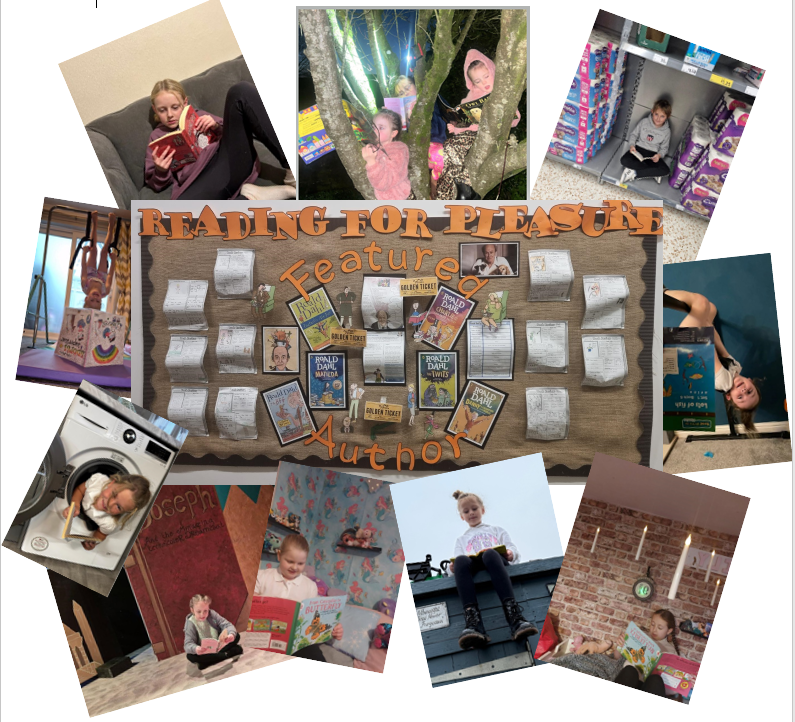
At our school, we know that reading is the key that unlocks a world of imagination, vocabulary, and lifelong learning. That is why we are absolutely thrilled to share that our home reading engagement is currently at an all-time high!
Our Keyring Incentive System has worked absolute wonders in motivating our young readers. For every milestone of 50 nights read at home, children earn a special, collectable tag for their reading keyring. The buzz around the school is fantastic, with pupils proudly displaying their achievements and eager to reach their next 50-night goal.
This incredible success is a true partnership between school and home. Every single night you spend sharing a book with your child directly boosts their classroom confidence, comprehension, and vocabulary.