Prayer and Liturgy
Prayer and Liturgy at St Joseph's
"In the faithful care of St Joseph, Jesus prospered."
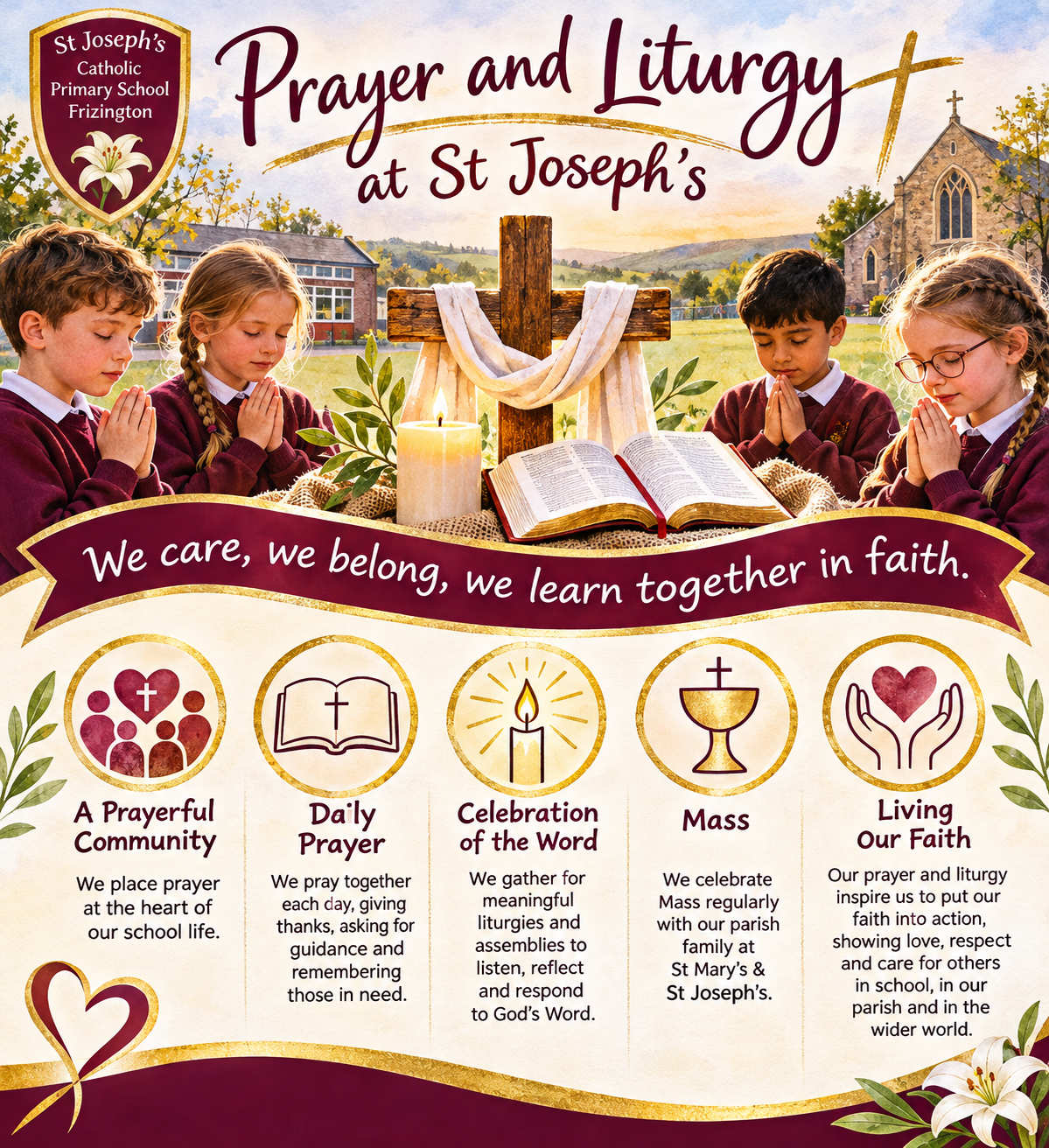
At St Joseph's we care, we belong, we learn together in faith. Prayer is where that begins. Every day, in every class, our children meet Jesus in Scripture, in silence, in song and in each other. We want each child to leave us knowing how to pray on their own, how to pray with others, and how to lead others in prayer.
Our school prayer is the prayer of St Richard of Chichester, which asks that we may "know you more clearly, love you more dearly, and follow you more nearly, day by day."
What we believe
Our practice follows To Love You More Dearly, the Prayer and Liturgy Directory published in 2023 by the Catholic Bishops' Conference of England and Wales and the Catholic Education Service (Bishops' Conference Liturgy Office announcement). We believe that prayer and liturgy:
- are an encounter with the living Christ, at the heart of our Catholic life;
- should be inclusive, formative and transformative – shaping who we are, not a performance;
- belong to the children – every pupil experiences, takes part in and learns to lead prayer;
- follow the seasons and feasts of the Church's year;
- are age-appropriate, engaging and accessible to everyone, whatever their faith or none.
Prayer and liturgy are separate from RE lessons and are not counted in our RE curriculum time.
Our Gospel values
Each half term the whole school focuses on Gospel values, linked to a passage of Scripture:
|
Half term |
Gospel values |
Scripture |
|---|---|---|
|
Autumn 1 |
Honesty and forgiveness |
The Prodigal Son |
|
Autumn 2 |
Thankfulness and perseverance |
The Birth of Christ |
|
Spring 1 |
Respect and resilience |
The Three Wise Men |
|
Spring 2 |
Generosity; Trust |
The Good Samaritan; The Parting of the Red Sea |
|
Summer 1 |
Truth |
Pentecost |
|
Summer 2 |
Community |
Sharing a meal |
Our daily rhythm of prayer
Prayer shapes every school day. At the same time in every classroom we switch off the lights, light the candle and sound the singing bowl, so the whole school prays in a calm, prayerful atmosphere.
- Morning Prayer – praising God for the new day and trusting him with what lies ahead.
- Grace Before Meals – thanking God for our food and remembering those in need.
- End of Day Prayer – giving thanks, reflecting on the day and placing our worries in God's hands.
We use a variety of resources as a starting point and adapt them for our children. Staff pray with the children, not just alongside them, and begin staff meetings with prayer.
Our school prayers
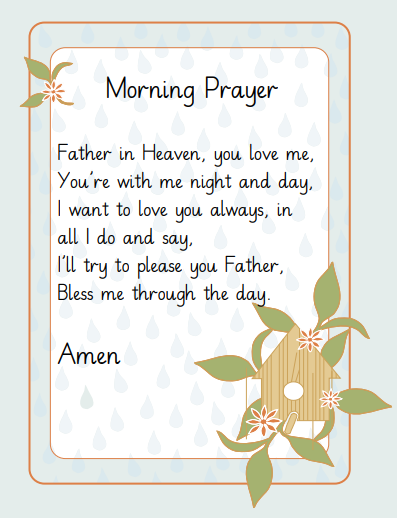
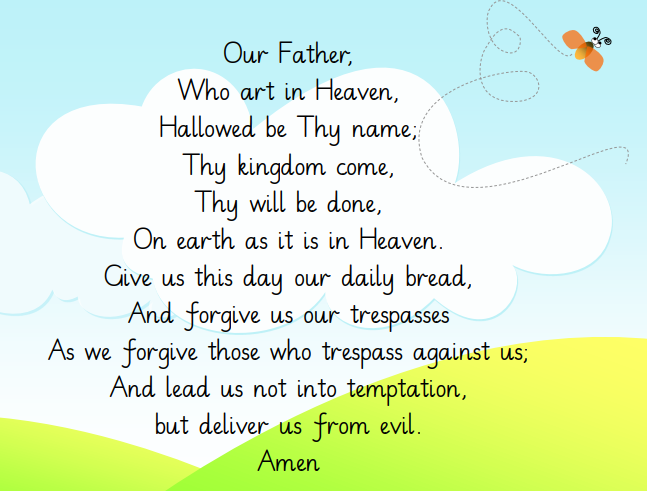

All staff model reverence and take part alongside the children, so that prayer becomes a natural, unforced part of school life rather than something simply delivered to pupils.
Our week of prayer and liturgy
|
Day |
What happens |
Where and when |
Led by |
|---|---|---|---|
|
Monday |
Whole-school Celebration of the Word (Gospel assembly) |
Hall, 10:20 |
Miss Savage |
|
Tuesday |
Class 1: Celebration of the Word led by KS2 pupils Class 2: Christian Meditation |
Classrooms |
KS2 pupils; Class 2 staff |
|
Wednesday |
Whole-school Celebration of the Word with hymns |
Hall, 9:30 |
Fr Paul and staff |
|
Thursday |
Class 1: Christian Meditation · Class 2: child-led Celebration of the Word |
Classrooms |
Class 1 staff; Class 2 pupils |
|
Friday |
Whole-school Celebration of the Word and celebration assembly – parents join us once a month |
Hall, 2:45 |
Miss Savage |
Fr Paul also leads weekly hymn practice with a member of staff, and each month we share the Holy Father's prayer intention.
How our liturgies are shaped
Every act of prayer and liturgy follows the same four steps – Gather, Listen, Respond, Go Forth, so children know the pattern and can lead it themselves:
- Gather – we come together, prepare the space and focus on a symbol.
- Listen – we listen to God's Word in Scripture.
- Respond – we respond to God's Word in prayer, song or silence.
- Go Forth – we leave with something to live out or share with others.
Children leading prayer
Our children grow step by step from taking part in prayer to planning and leading it. By Year 6, pupils plan and lead whole liturgies on their own, choosing the Scripture, the response and the mission.
|
|
Reception |
Years 1 and 2 |
Years 3 and 4 |
Years 5 and 6 |
|---|---|---|---|---|
|
Prayers we learn |
Sign of the Cross, Morning Prayer, Grace, Home Time Prayer |
Hail Mary, Our Father, Glory Be, our own thank-you prayers |
Apostles' Creed, Act of Contrition, Come Holy Spirit, Prayer of St Richard, our own prayers |
Morning Offering, the Rosary, the Magnificat, Acts of Faith, Hope and Love |
|
Gestures |
Closing eyes, joining hands, the Sign of the Cross |
Bowing heads, the Sign of Peace |
Genuflecting, standing, sitting and kneeling at Mass, receiving Communion or a blessing |
Praying with reverence and helping younger children |
|
Responses |
"Amen" |
"And with your spirit" |
Gospel responses, "The Lord be with you" |
All Mass responses |
|
Leading |
Choosing a candle – "putting people in our hearts" |
Choosing a prayer and artefacts; setting out the focus |
Planning and gathering independently; choosing and reading Scripture |
Planning the response and mission; fully planning and leading class prayer and liturgy |
At Mass, older pupils serve as readers, psalmists, servers, gift bearers and welcomers.
Many ways to pray
We want children to discover that there are many ways to talk and listen to God:
- Praise and thanksgiving – psalms, hymns and spontaneous prayer.
- Sorrow and reconciliation – the Act of Contrition, the Examen and preparation for the Sacrament of Reconciliation.
- Petition and intercession – bidding prayers, litanies and our prayer trees.
- Contemplative prayer – Lectio Divina (read, reflect, pray, rest), Visio Divina (look, notice, wonder, listen, respond) and Christian Meditation .
- Devotions – the Rosary in October and May, the Stations of the Cross in Lent and the crowning of Mary in May.
Sacred spaces
Every classroom has a prayer focus that changes with the liturgical season: a cloth in the season's colour, a crucifix, a statue, a candle, a singing bowl, Scripture, our mission statement and pictures of Pope Leo XIV, St Joseph and the class saint. Our reflection room, blessed by Fr Paul, can be a quiet place for personal prayer and small-group liturgy.
The Spirituality of St Joseph
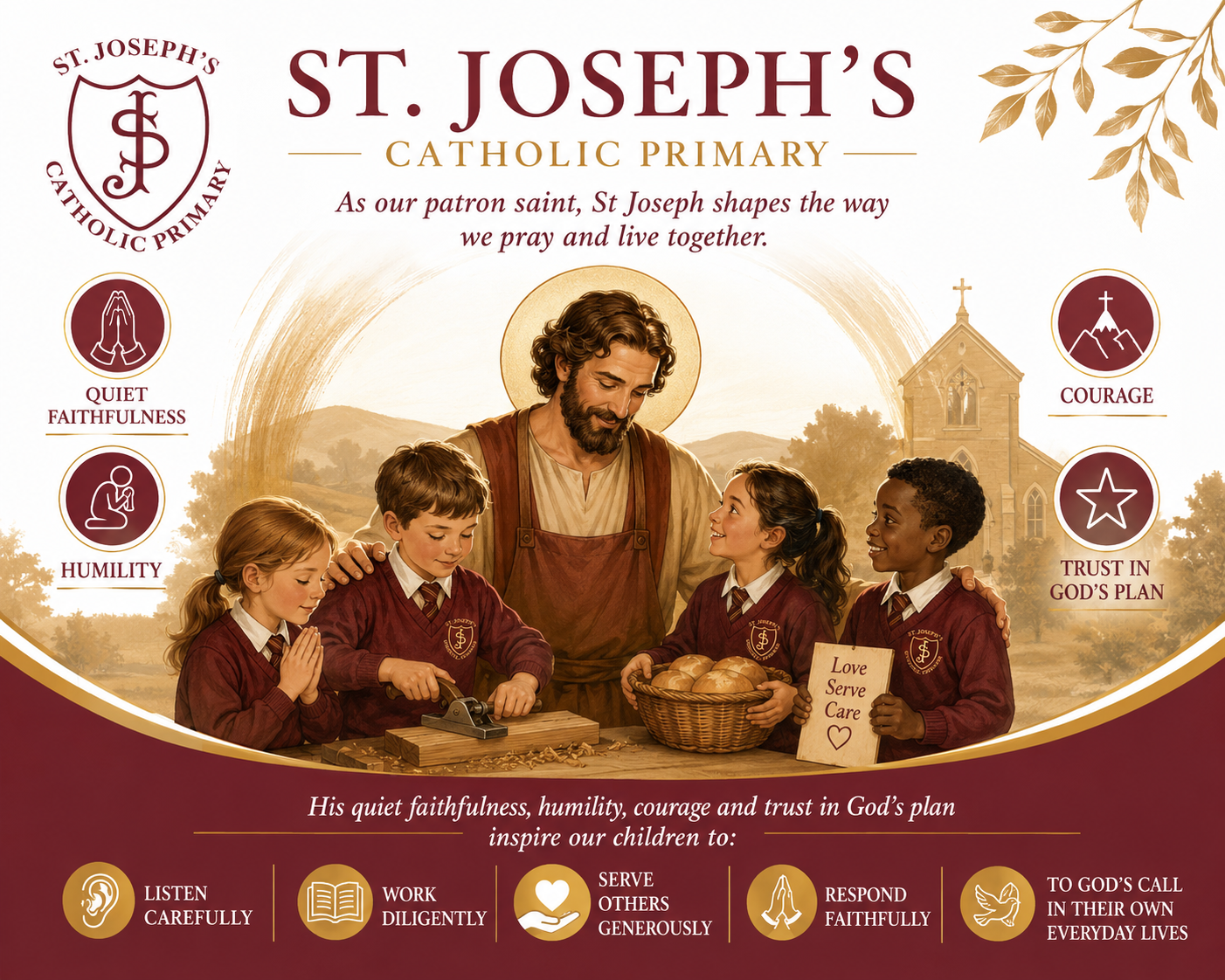
As our patron saint, St Joseph shapes the way we pray and live together. His quiet faithfulness, humility, courage and trust in God's plan inspire our children to listen carefully, work diligently, serve others generously, and respond faithfully to God's call in their own everyday lives.
Our liturgical year 2026–27
We celebrate the Church's year together as a school, parish and community. Dates of Masses may move to the nearest school day.
Autumn term
- Start of Year Mass and Reception's first Mass; Season of Creation Mass (September)
- Month of the Rosary – making rosary beads and a "human rosary" in KS2 (October)
- All Saints (Sunday 1 November); Remembrance and the Poppy Appeal;
- Advent begins Sunday 29 November – Advent wreath and Jesse tree
- Reconciliation for Class 2 with Fr Paul
- Santa Dash for a cause of the children choice, Class 1 Nativity, Carol Service in church for families and parish, carol singing in the community, and the Catholic Schools Advent Service at St Begh's in Whitehaven
Spring term
- Epiphany (Sunday 3 January); introduction to Lectio Divina
- Candlemas (Tuesday 2 February); Month of the Holy Family
- Fratelli Tutti and CAFOD "global neighbour" assembly; small gifts for sick and elderly parishioners
- Ash Wednesday (10 February) – Lenten promises and Mass with ashes
- Big Lent Walk and the Stations of the Cross pilgrimage to St Mary's and the Grotto
- St Patrick's Day (17 March) – cards for St Patrick's School
- St Joseph's Day (Friday 19 March) – our patronal feast: Mass, dressing in red, cards and coffee for parents and parishioners
- Holy Week and Easter (Easter Sunday 28 March) – Easter cards and daffodils for parishioners
Summer term
- St George's Day (23 April); Great Cumbrian Litter Pick
- St Joseph the Worker (1 May); Month of Mary
- Ascension (Sunday 9 May) and Pentecost (Sunday 16 May)
- First Holy Communion (every other year)
- Class Masses; Saints Peter and Paul (Tuesday 29 June)
- Year 6 Leavers' Mass (July)
Mass and our parish
We belong to the Parish of St Mary and St Joseph, Frizington and Cleator. Fr Paul is a regular and much-loved part of school life: he leads Wednesday's Celebration of the Word and weekly hymn practice, celebrates Mass with us at St Joseph's Church and celebrates the Sacrament of Reconciliation with Class 2.
Whole-school Masses mark the start of each academic year, Holy Days of Obligation, St Joseph's Day and other key feasts. Children prepare by studying the readings, practising hymns and rehearsing their roles, so that they take part with understanding and reverence. Families and parishioners are always welcome.
Music in prayer
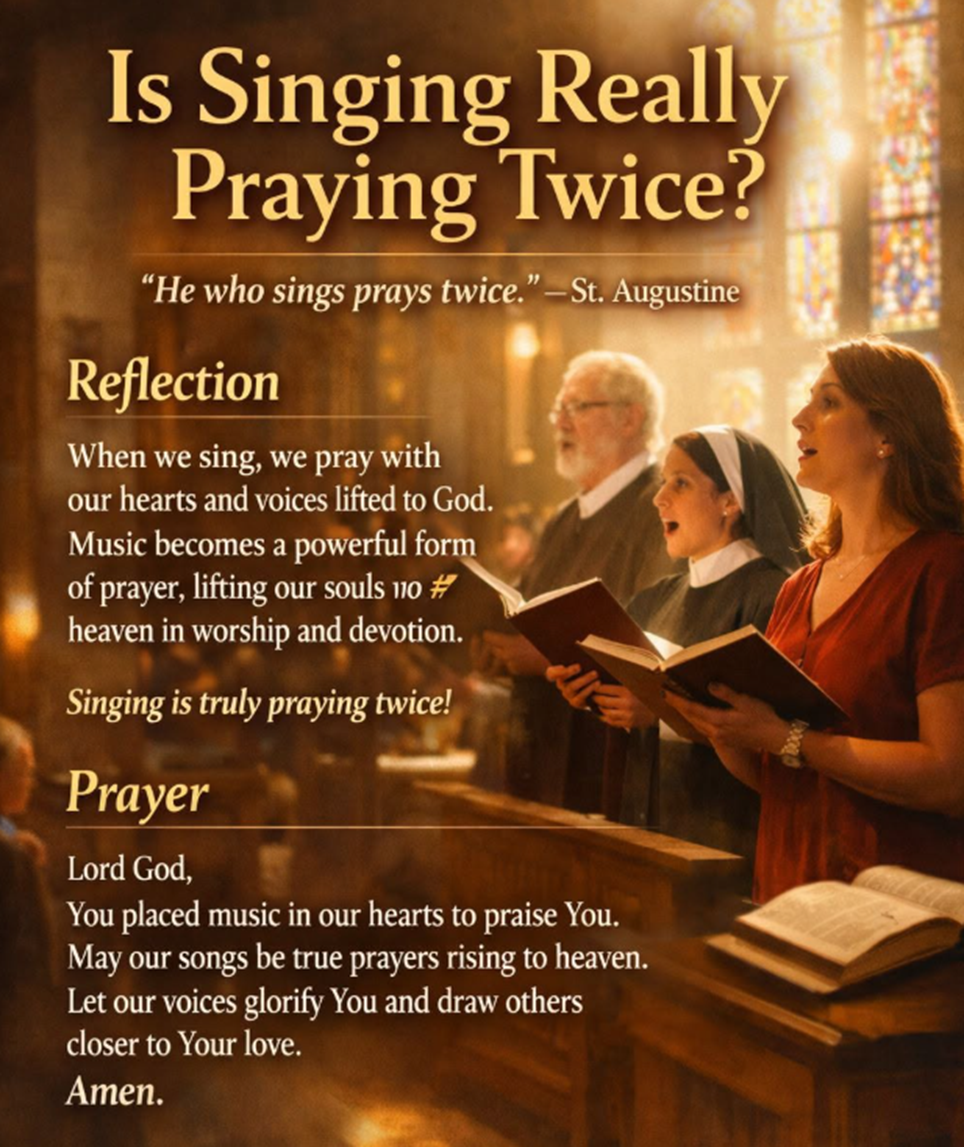
Singing is prayer twice over. Weekly hymn practice with Fr Paul builds a shared repertoire of hymns, sung responses and seasonal music, so every child can join in at Mass and in school liturgies.
One of Father Pauls favourite quotes
'He who sings prayers twice' - St. Augustine
Prayer for everyone
Prayer and liturgy at St Joseph's are open to all. Children and families of other faiths and none are warmly welcomed to take part respectfully. Our language is invitational – children are encouraged, never pressured. We use visual prompts, symbol-supported texts, multi-sensory resources, quiet alternatives and adapted leadership roles so that every child, including those with SEND, can pray and lead in their own way.
Praying at home
We invite families to pray with us:
- join our Friday celebration once a month and our Masses in church;
- use our school prayers and the Prayer to St Joseph at home (see Documents below);
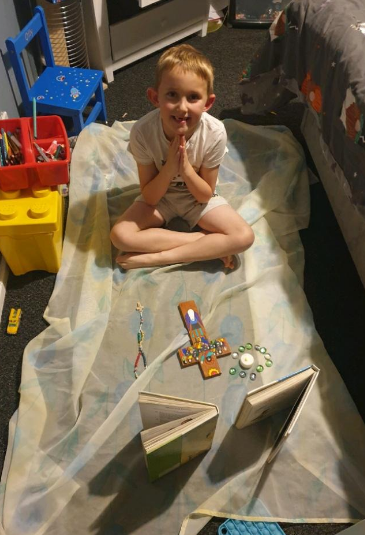
- share the Holy Father's prayer intention for this month:.
How we know it is making a difference
We check the quality and impact of prayer and liturgy at least once a year, listening to pupils, parents, staff, Fr Paul and governors. What we learn shapes our planning.
- [Finding from pupil voice, e.g. what pupils say prayer means to them]
- [Finding from governor or diocesan monitoring visit]
- [One change made as a result, e.g. a new form of prayer introduced]
All staff receive induction in leading prayer and liturgy and take part in formation at least once a year.
What our pupils say
KS1 pupil
KS2 pupil
Upper KS2 pupil quote about leading liturgy
What our parents say
Parent
Right to withdraw
Parents have a legal right to withdraw their child from prayer and liturgy (School Standards and Framework Act 1998, s.71). If you are thinking about this, please speak to Miss Savage first so we can talk about how your child can be included.
Documents
- Prayer and Liturgy Policy 2026–27
- Annual Provision of Prayer and Liturgy 2026–27
- Progression in Prayer and Liturgy
- Our School Prayers and Prayer to St Joseph
Our Prayer and Liturgy Lead is Miss Savage. Please contact the school office if you would like to know more.
Listening to God: Lectio Divina, Visio Divina and Christian meditation
At St Joseph's, we believe that prayer is about listening to God, not only speaking to him. Throughout the year, children experience three contemplative forms of prayer, carefully adapted to their age and stage:
- Lectio Divina — praying with Sacred Scripture, following a simple rhythm: Read, Reflect, Pray, Rest.
- Visio Divina — praying with sacred images, following a rhythm of Look, Notice, Wonder, Listen, Respond.
- Christian Meditation — sitting quietly and still, often returning gently to a single simple prayer word, to rest in God's presence beyond words.
Christian Meditation
Christian Meditation gives children a regular, unhurried space simply to be still with God. Sitting quietly, with a straight back and stillness in body and mind, children return gently to a short prayer word — such as Maranatha, come Lord Jesus — whenever their thoughts wander, letting go of distraction and resting in God's presence.
This simple discipline of silence complements our more active, spoken forms of prayer. Over time, children build a genuine capacity for stillness, learning that some of the deepest moments of prayer happen not in words, but in quiet, attentive rest in God's company.
As children move through the school, they grow more confident in leading these forms of prayer for themselves — choosing scripture or images, introducing a period of meditation, asking thoughtful questions, and helping others to reflect more deeply.
Our Parish Family
We maintain strong, living links with our parish, St Mary and St Joseph's, and with the Diocese of Lancaster. Father Paul is a regular and valued visitor to our school, leading Mass, hymn practice, and taking a close interest in the spiritual life of our children.
We recognise parents as the first educators in faith. Through shared liturgies, sacramental preparation, family prayer resources and parish celebrations, we work to build a genuine partnership between home, school and parish, so that children experience a consistent life of faith wherever they are.
Welcoming Everyone
Prayer and liturgy are central to our Catholic identity, and open to all. We welcome pupils and families of every faith, and none, to take part respectfully, and we make reasonable adjustments for children with SEND, EAL or other additional needs, using visual prompts, symbol-supported texts and multi-sensory approaches where they are helpful.
We recognise that every child is on their own faith journey, and we aim to ensure that all pupils are welcomed and respected in their participation, able to access prayer and liturgy at their own level of understanding, and encouraged — never required — to take part.
Parents have a legal right to withdraw their child from acts of prayer and liturgy up to the age of 16 (School Standards and Framework Act 1998, s.71(1A)); any parent wishing to discuss this is welcome to speak to the headteacher.
Keeping Children Safe
All adults follow our safeguarding procedures at all times. Where a child shares something personal or sensitive during prayer, staff respond with pastoral care and confidentiality, and escalate any concerns in line with our safeguarding policy. Risk assessments are completed for any liturgy taking place off-site, such as visits to church.
Prayers We Treasure
Children at St Joseph's grow up knowing a shared treasury of prayer, learned and returned to again and again throughout their time with us. A few of our best-loved prayers:
The Sign of the Cross
In the name of the Father, and of the Son, and of the Holy Spirit. Amen.
Grace Before Meals
Bless us, O Lord, and these your gifts, which we are about to receive from your bounty.
Through Christ our Lord. Amen.
Prayer of St Richard of Chichester
Thanks be to you, my Lord Jesus Christ, for all the benefits which you have given me,
for all the pains and insults which you have borne for me.
O most merciful Redeemer, friend and brother, may I know you more clearly, love you more dearly,
and follow you more nearly, day by day. Amen.
Living Prayer Beyond School
Our hope is that prayer does not end when the school day finishes. We encourage children and families to keep praying together at home, to take part in parish life, and to recognise God's presence in family life, in creation, and in service of others.
Through prayer and liturgy, we seek to nurture children who grow into lifelong disciples of Jesus Christ — the true measure of everything on this page.
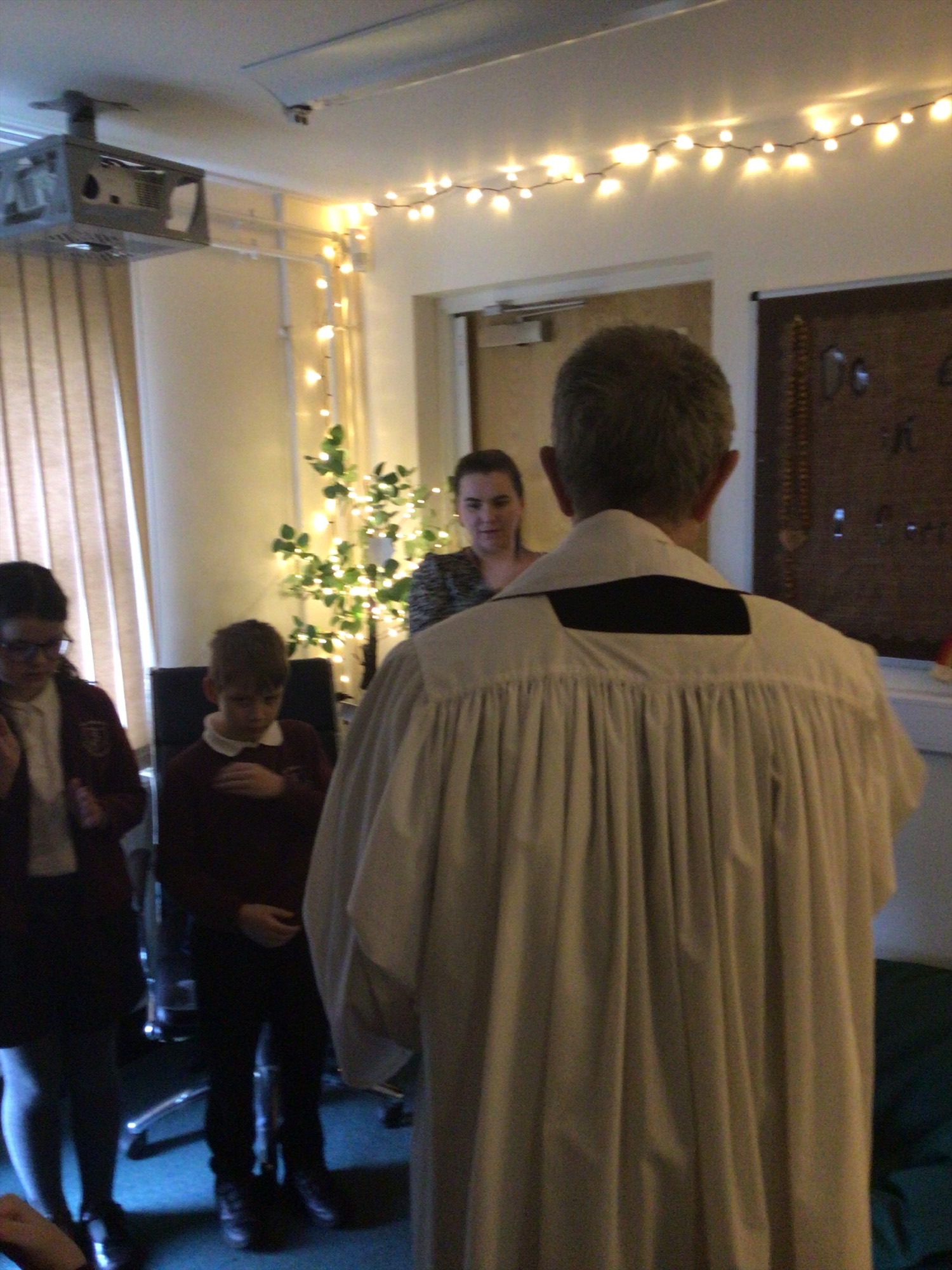
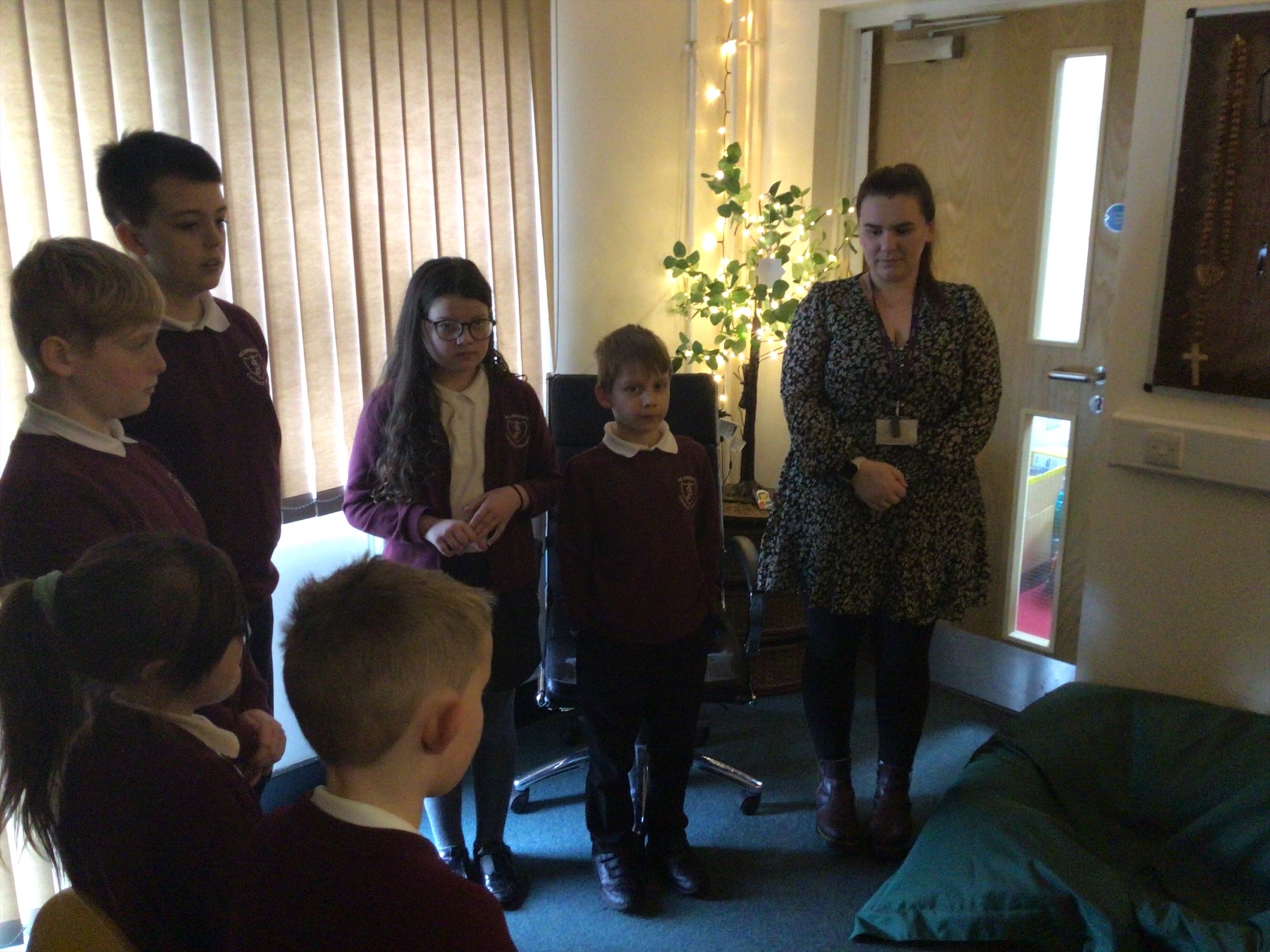
Our prayer room
Father Paul came to bless our school prayer room.
At home
Pope's prayer intention